Hi! I’m Jasper!
I’m a Master’s candidate at Columbia University. I’m pursuing a personalized thesis in Quantum Algorithms. I aim to make my Master’s program as research-oriented as possible with the goal of making it a trial run for a PhD program.
About me
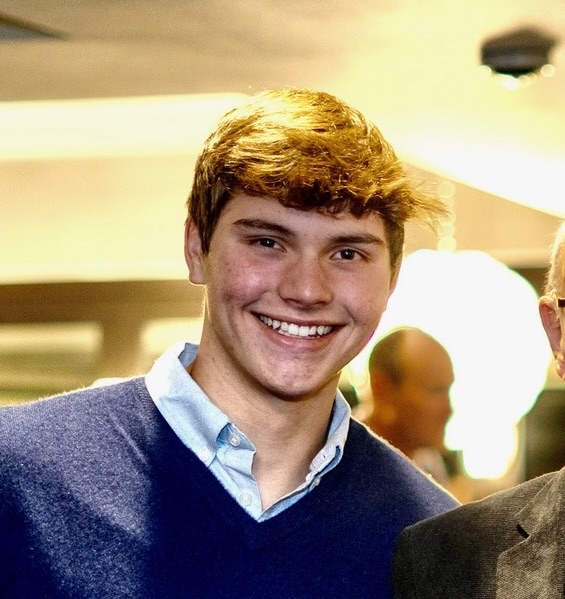
Born and raised in the heart of Silicon Valley, I grew up surrounded by technology, curiosity, and constant reinvention. That environment sparked my passion for understanding how systems work, and how to make them better. Over the years, my journey in computer science has evolved from building software and hacking together creative projects to exploring the deep theoretical and computational frontiers of quantum computing and machine learning.
I’ve developed a strong foundation in AI-driven research, spanning topics from large language models and data-driven drug discovery to quantum algorithms and distributed systems. My portfolio includes hands-on work in both academia and industry, from fine-tuning LLMs for policy analysis to designing scalable inference pipelines and investigating ways to improve the reliability of generative protein modeling.
I believe innovation happens where theory meets application. I bring a mix of scientific curiosity, engineering precision, and creative experimentation to every project, driven by the conviction that emerging technologies like quantum computing and AI will redefine how we solve the world’s hardest problems.
Education
Columbia University
Master’s of Science in Computer Science (Machine Learning Track) – Sep 2025 – December 2026
Quantum Coursework:
- COMS6998E Topics in Computer Science: Quantum Error Correction
- EECS6890E Topics-Information Processing: Quantum Engineering
- PHYS5084GR Quantum Simulation and Computing Lab
- ELEN4730E Quantum Optimization and Machine Learning
- COMS4281W Introduction to Quantum Computing
Other Relevant Coursework:
- COMS6997E Topics in Computer Science: Machine Assisted Math
- COMS4776E Neural Networks and Deep Learning
- COMS4762W Machine Learning for Functional Genomics
Teaching Assistant
- COMS4281W Introduction to Quantum Computing
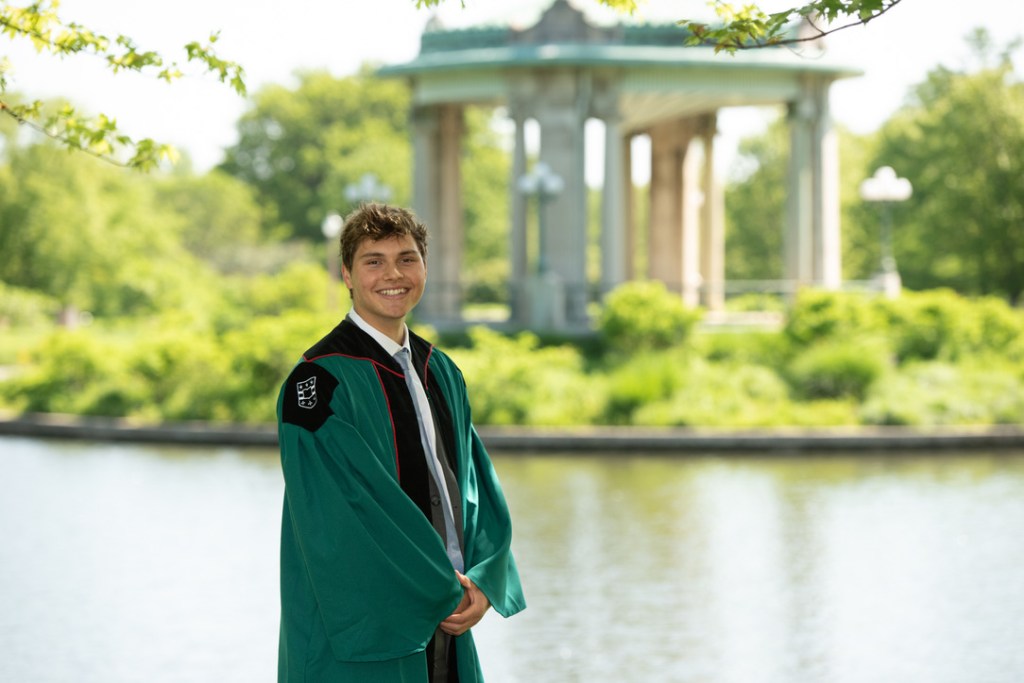
Washington University in St. Louis
Bachelor of Science in Computer Science Aug 2021 – May 2025
Relevant Coursework:
- CSE 587A Algorithms for Biosequence Comparison
- CSE 517A Machine Learning
- CSE 437S Software Engineering Workshop
- CSE 434S Reverse Engineering and Malware Analysis
- CSE 433S Introduction to Computer Security
- CSE 417T Introduction to Machine Learning
- CSE 412A Introduction to Artificial Intelligence
- CSE 347 Analysis of Algorithms
- CSE 332S Object-Oriented Software Development
- CSE 330S Rapid Prototype Development and Creative Programming
- CSE 247 Data Structures and Algorithms
- CSE 231S Introduction to Parallel and Concurrent Programming
- CSE 132 Introduction to Computer Engineering
Other Coursework:
- ESE 326 Probability and Statistics for Engineering
- Engr 310 Technical Writing
- Math 310 Foundation for Higher Mathematics
- Math 309 Matrix Algebra
- Math 233 Calculus III
- Econ 413W Introduction to Econometrics with Writing
- Econ 4011 Intermediate Microeconomic Theory
- Econ 4021 Intermediate Macroeconomic Theory
- Econ 4111 Optimization and Economic Theory
- Econ 467 Game Theory
Teaching Assistant:
- CSE 434S Reverse Engineering and Malware Analysis
- CSE 231S Introduction to Parallel and Concurrent Programming
Danish Institute for Study Abroad Copenhagen
Jan 2024 – May 2024
Relevant Coursework:
- Artificial Neural Networks and Deep Learning
- Artificial Intelligence
Israel Summer Business Academy
Jun 2022 – May 2022
- MGT 200 Venture Creation
- INTL 320 Business, Innovation and Entrepreneurship
Menlo School
High school Diploma – Aug 2017 – May 2021
- 4 years of Computer Science
- 5 on AP Computer Science A
Research
Cidon Systems Research Lab
Graduate Student Researcher – Columbia – Sep 2025 – Present
Collaborating with Dr. Asaf Cidon and Barracuda Networks, I explore machine-learning approaches to detect spam and phishing attacks. My work involves developing and evaluating new classification pipelines that combine language-model embeddings with real-world email telemetry to improve detection precision while minimizing false positives.
Quantum Algorithms Research Reading Group
Graduate Student Researcher – Columbia – Sep 2025 – Present
I am part of a new graduate reading group under Dr. Henry Yuen focused on quantum algorithms, where we analyze foundational papers and reproduce algorithmic results. My work includes preparing technical summaries, running small simulation experiments, and organizing discussions that deepen our understanding of near-term and fault-tolerant quantum computing methods.
Desdr Open Insurance Toolkit
Graduate Student Researcher – Columbia – Sep 2025 – Dec 2025
Working with Dr. Eugene Wu on building an open-source insurance modeling toolkit for NGOs and governments serving rural farmers in low-data regions. Our team collects field data through SMS-based surveys and converts it into actuarial and climate-risk features. I help design models and dashboards that estimate expected losses and guide organizations in creating affordable micro-insurance programs.
Complex Resilient Intelligent System Lab
Graduate Student Researcher – Columbia – May 2025 – Dec 2025
Working under Dr. Venkat Venkatasubramanian, I am building a drug-discovery tool aimed at reducing hallucinations in AlphaFold predictions. My research focuses on translating plain-language drug queries into interpretable, ontology-based outputs grounded in real molecular-graph data. This project integrates systems engineering principles with AI-driven protein modeling to enhance the reliability of generative discovery workflows.
Foster System Database
Undergraduate Student Researcher – WashU – Sep 2024 – June 2025
Under the supervision of Dr. Ian Fillmore, I fine-tuned a LLaMA 3 model using Unsloth to answer detailed queries about foster-care policy data. I implemented Human-in-the-Loop reinforcement learning on Hugging Face Spaces to iteratively refine model responses. This system enabled cross-state policy comparisons and provided researchers with an interactive way to analyze foster-care outcomes.
Computer Vision & AI Lab
Undergraduate Student Researcher – WashU – Sep 2024 – June 2025
In Dr. Umar Iqbal’s group, I developed scalable data-collection pipelines that parsed billions of Reddit posts to study behavioral and demographic trends. The project combined distributed scraping, data cleaning, and statistical modeling to analyze patterns in online discourse at population scale.
Work Experience
Highnote
Cybersecurity Engineer Intern – Summer 2024
At Highnote, a fintech startup focused on card issuing and processing, I took ownership of the company’s Security Information and Event Management (SIEM) system. I unified logs, metrics, and alerts from AWS, GCP, and Datadog into a single Elasticsearch instance, improving visibility and simplifying incident response. I configured every component of the SIEM—agents, integrations, pipelines, data streams, indices, and APIs—to support more than a terabyte of daily log ingestion. I implemented over 100 alerts for suspicious activity such as logins, commands, and downloads, combining hard-coded rules with new machine-learning and cross-system detections to strengthen security monitoring.
Mindtrip
Software Engineer Intern – Summer 2023
At Mindtrip, a travel-tech startup leveraging large language models for personalized trip planning, I led the design and deployment of internal admin panels using JavaScript (frontend) and Ruby on Rails (backend) through Retool. These tools gave the engineering team full visibility into production data and enabled secure actions such as editing or deactivating entries directly from the dashboard. My work eliminated manual database edits, improved data consistency, and saved the team over 250 hours per month in operational overhead.
Bugcrowd
Associate Application Security Engineer – Summer 2020
At Bugcrowd, a global bug-bounty and vulnerability-management platform, I managed end-to-end bug triage operations, reviewing and validating vulnerability submissions from a worldwide network of researchers. I collaborated with Fortune 500 and major technology clients to confirm findings, prioritize remediation, and implement long-term preventive measures. This work sharpened my understanding of coordinated disclosure workflows and scalable security program management.
Sparkiverse
Teacher – Jan 2020 – Jul 2020
At Sparkiverse, an elementary after-school enrichment program, I taught coding and math concepts to elementary students using engaging, hands-on activities. I simplified technical ideas—such as logic gates—into accessible lessons and adapted the entire program for virtual instruction during the COVID-19 pandemic. By using Zoom and Minecraft as teaching tools, I maintained high engagement and learning outcomes despite the remote setting.
University Club of Palo Alto
Lifeguard – Jun 2018 – Jan 2020
At the University Club of Palo Alto, I cultivated leadership and crisis-management skills while ensuring member safety. I managed crowded pool environments, enforced safety protocols, and responded calmly to emergencies. This role taught me composure, quick decision-making, and teamwork under pressure.
Relevant Projects
WhatTheDuck iQuHacks 2026
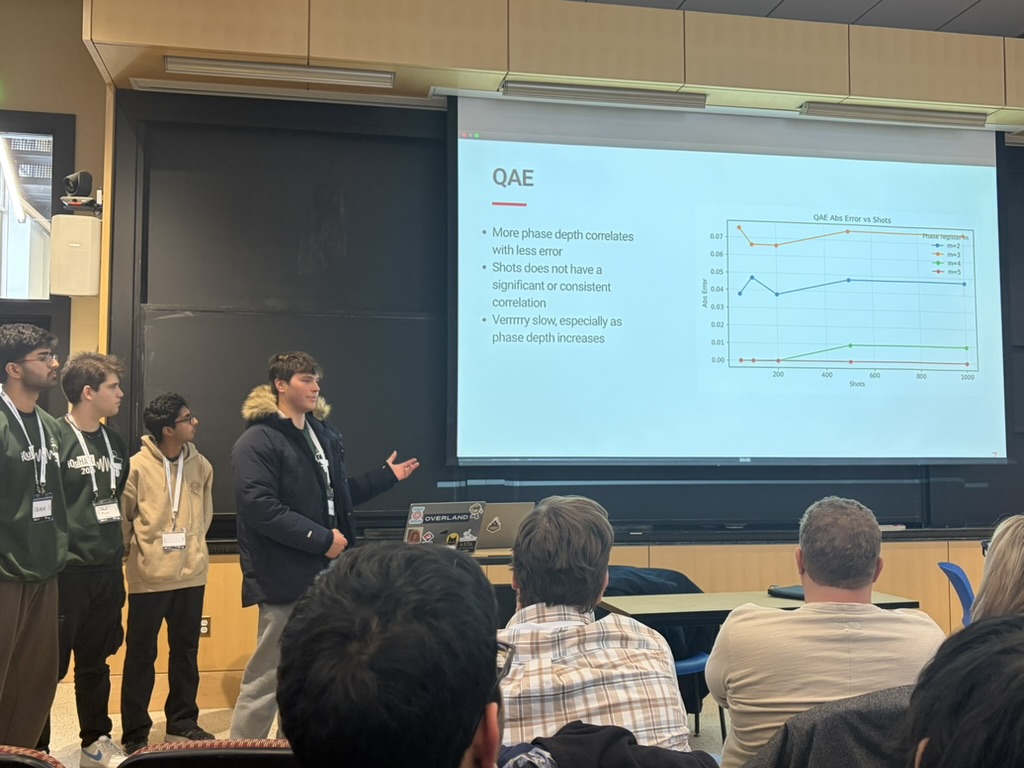
For the iQuHACK 2026 State Street × Classiq challenge, I designed the classical Quasi-Monte Carlo baseline and contributed to the design of the quantum Iterative Amplitude Estimation (IQAE) approach for Value at Risk (VaR) estimation. I implemented and benchmarked both pipelines using CUDA-Q, including reusable state preparation, threshold oracles, and a bisection-based VaR search, enabling large-scale and fair evaluation. I ensured rigor by enforcing identical loss models, discretization schemes, confidence levels, and stopping criteria across classical and quantum methods, empirically validating the expected O(1/ε²) versus O(1/ε) scaling behavior. Our work received an Honorable Mention in the State Street × Classiq category and won the NVIDIA Ecosystem Award for GPU-accelerated quantum–classical benchmarking.
Quantum Multiverse Optimizer (QTrim)
Snapdragon Multiverse Hackathon 2026
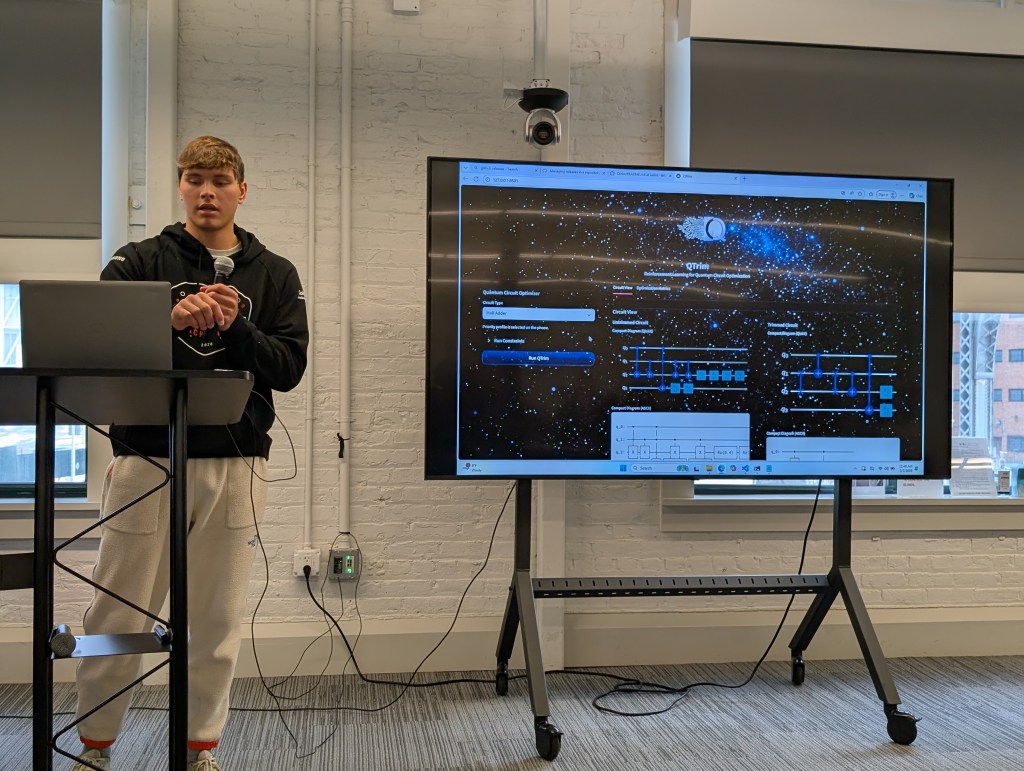
For the Snapdragon Multiverse Hackathon, I built the entire reinforcement learning pipeline end-to-end for hardware-aware quantum circuit optimization. I designed and implemented the RL environment, legal quantum circuit rewrite rules, cost metrics, and training workflows, then trained agents offline to learn multi-step optimization strategies that preserve quantum correctness. I helped deploy the trained policy into a full PC + mobile system, integrating RL inference into a desktop control surface, API backend, and Android phone client that represents a hardware-aware edge node. The resulting system enables dynamic, real-time optimization of quantum circuits by combining offline learning with on-device inference under changing hardware constraints, demonstrating a realistic architecture for adaptive quantum software stacks. The project was selected as Runner-Up.
Practical LLM-Based Lossless Compression
This project explores the practicality of using large language models for lossless text compression by combining autoregressive LLMs with arithmetic coding. We implemented an optimized compression pipeline and evaluated multiple open-source models, finding that LLMs achieve 5–16× average compression and up to 39× on individual files, significantly outperforming classical compressors like gzip and zstd. I focused on systems-level optimizations, including static KV caching, CUDA graph capture, and batched segment processing, and analyzed the trade-offs between compression ratio, throughput, and GPU memory usage.
Multimodal Hyperbolic Embeddings for AMR Detection and Taxonomic Modeling
This paper introduces HyperAMR, a multimodal framework for antimicrobial resistance detection that embeds sequence features, functional AMR annotations, and taxonomic lineage into a shared hyperbolic space to explicitly model biological hierarchy. Using over 250,000 metagenomic contigs, we show that hyperbolic representations consistently match or outperform Euclidean baselines in macro-AUPR, particularly for rare resistance classes. My contributions included model development, data processing, and evaluation of hierarchy-aware learning objectives.
ASLingo
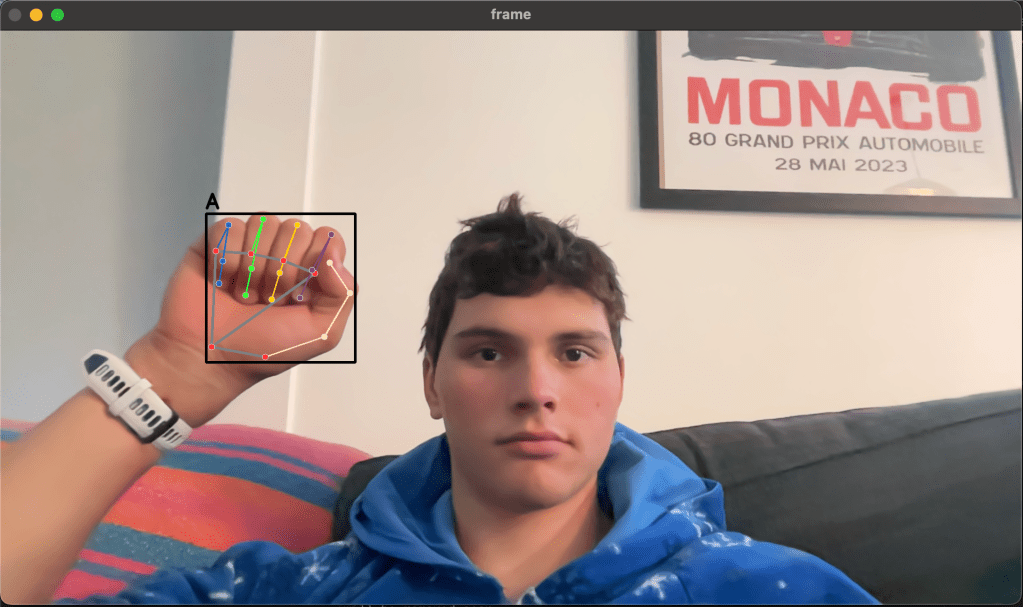
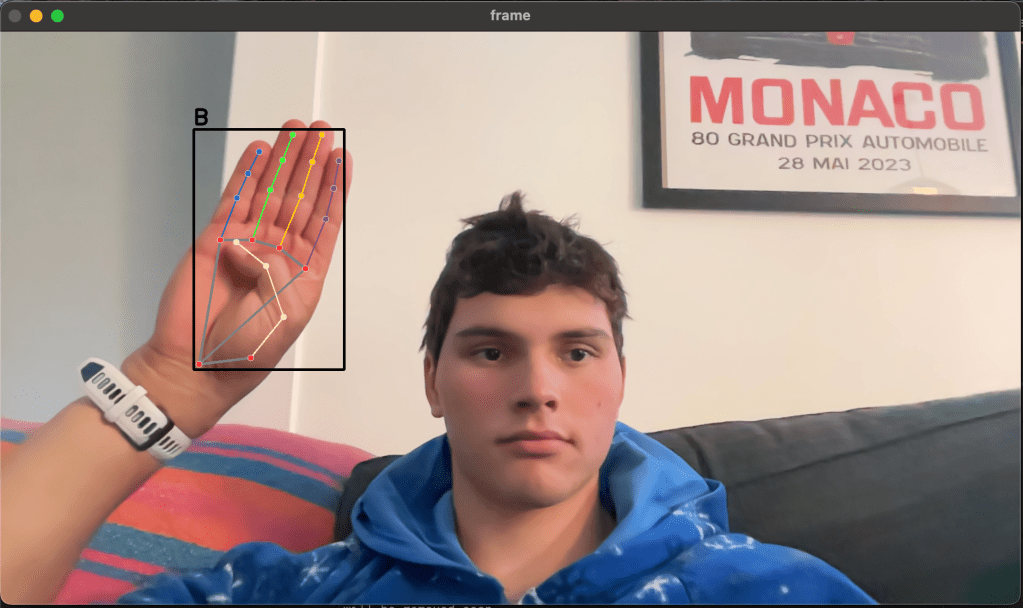
As part of my Software Engineering Workshop, my team built ASLingo, a Duolingo-style web app for learning American Sign Language. I led the computer-vision component, developing a real-time hand-sign translation pipeline using Google’s MediaPipe API and a RandomForestClassifier for rapid inference. I later integrated a Long Short-Term Memory (LSTM) model to process temporal sequences in video, enabling accurate continuous-sign recognition.
Skeleton2Animal
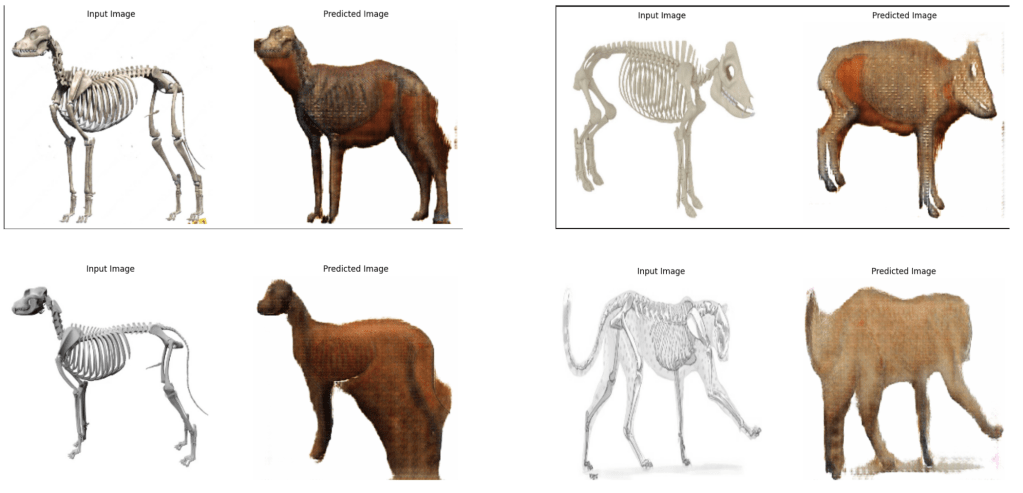
In this computer-vision research project, we implemented a Reverse CycleGAN architecture where F:X→Y served as the loss generator and G:Y→X as the final generator. I contributed to model design, training, and extensive data-augmentation experimentation. Despite limited dataset size, the project was a valuable exploration of image-to-image translation and highlighted the importance of data diversity in generative modeling.
In progress:
Results!
Other Experiences
Columbia Autonomous Racing Club
Collaborating in the first ever semester of the autonomous racing club at Columbia. We are fundraising with companies and adapting another member’s past project from another university.
St. Louis Tutor Me Program
As a volunteer tutor, I work with K-12 students to strengthen math and reading fundamentals. Most recently, I spent a semester helping a 2nd grader catch up in math and reading after he fell behind. It’s been one of the most rewarding things I’ve ever done.
WashU Votes
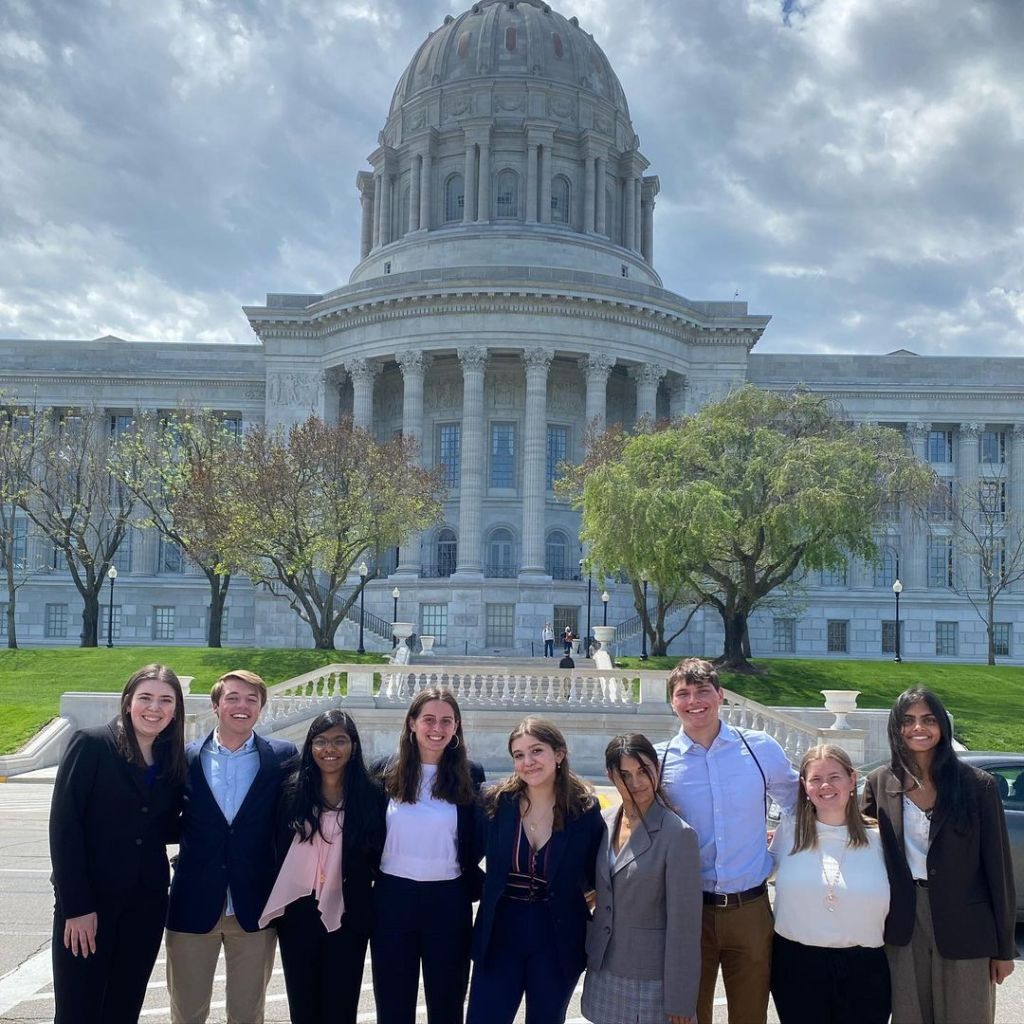
Through WashU Votes, I promoted civic engagement across campus and the broader St. Louis community. I helped organize voter-registration drives, managed polling booths, and led outreach events to raise awareness about election updates and voting-law changes. I also represented WashU at the Missouri State Capitol in Jefferson City, meeting with legislators to advocate for accessible voting rights.
WashU Gymnastics Club
Gymnastics has been one of my longest-running passions. After years training with Stanford Boys Gymnastics, I joined the WashU team, where I led practices and compete at collegiate meets. The shift from a youth program to a student-run club taught me leadership, resilience, and collaboration in a new competitive setting.

Biking
I love to bike tour! All of my trips I’ve carried tent, food, and all supplies on our bikes with no van support.
Biggest bikes:
- 3,200 miles from Savannah, Georgia to LA, California – Summer 2019
- 1,500 miles from Amsterdam, Netherlands to Barcelona, Spain- Summer 2018
- 1,000 miles in Canadian and Montanan Rockies – Summer 2021
- 2025 Death Ride, 115 miles with 14,000 feet of elevation through Sierra Mountains – Summer 2025
- 400 miles from Jasper(!), Canada to Banff, Canada – Summer 2025
Ironman
- 2025 Oceanside Ironman 70.3: 5:18
- 2025 Lake Placid Ironman: Stress Fracture /:

Skills
Quantum Computing and Algorithms
Quantum Algorithms and Primitives
- Hamiltonian simulation
- Quantum phase estimation (QPE)
- Amplitude amplification and estimation
- Quantum walks
- Block encoding and linear combination of unitaries (LCU)
Variational and Hybrid Algorithms
- Variational Quantum Eigensolver (VQE)
- Quantum Approximate Optimization Algorithm (QAOA)
- Hybrid quantum classical optimization loops
- Parameterized quantum circuits
Circuit Design and Execution
- Quantum circuit design and analysis
- Statevector and noise aware simulation
- Circuit optimization and transpilation
- Backend execution and benchmarking
Noise and Error Awareness
- Noise models and decoherence
- Error mitigation techniques
- Quantum error correction fundamentals
- NISQ era algorithm tradeoffs
Languages
- Python
scientific computing, quantum simulation, ML, optimization, research tooling - C++
performance critical systems, simulators, numerical code - C
- MATLAB
- Java
- Go
- JavaScript, TypeScript
- HTML, CSS, PHP
- SQL
- R
- Bash
- Swift
- x86 Assembly, ARM Assembly
- French (:
Frameworks and Libraries
Quantum and Scientific Computing
- Qiskit
- Cirq
- PennyLane
- NumPy
- SciPy
- NetworkX
- Matplotlib
- Pandas
Machine Learning
- PyTorch
- TensorFlow
- Keras
- Scikit-learn
- Hugging Face
Acceleration and Simulation
- CUDA
- Tensor based simulation techniques
Other Technical Skills
- Technical writing
- Research documentation
- Experimental design and benchmarking
- Reproducible research workflows
- Developer tooling and automation
Mathematics and Theoretical Foundations
Linear Algebra and Numerical Methods
- Eigen decomposition
- Matrix exponentials
- Spectral methods
- Tensor methods and contractions
Optimization
- Gradient based optimization
- Stochastic optimization
- Constrained and unconstrained methods
Complexity and Algorithms
- Quantum complexity theory
- BQP, QMA
- Oracle and query complexity models
- Asymptotic runtime and space analysis
- Classical vs quantum complexity comparisons
Discrete Math and Probability
- Graph theory
- Combinatorial optimization
- Spectral graph theory
- Probability theory for quantum systems
Systems, Tooling, and Infrastructure
- Linux / Unix
- Git
- Docker
- Jupyter Notebooks
- LaTeX
- qBraid
- Rest APIs
Cloud and Platforms
- AWS
- GCP
- Azure
Data and Observability
- Datadog
- Elasticsearch
Databases
- PostgreSQL
- MySQL
- MongoDB
- Supabase
Web and Application Frameworks
- Django
- Ruby on Rails
- React.js
- Node.js
- Next.js
- Express.js
- AngularJS
- jQuery
Non-Technical Skills
- Leadership
- Teamwork
- Entrepreneurship
- Mentorship
- Cross disciplinary collaboration


 Jasper Sands